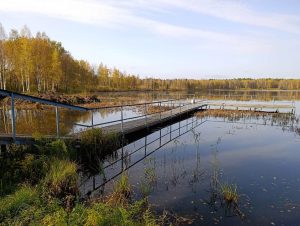
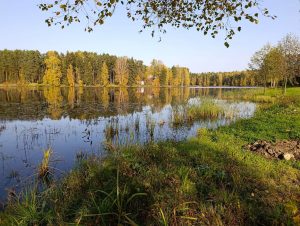
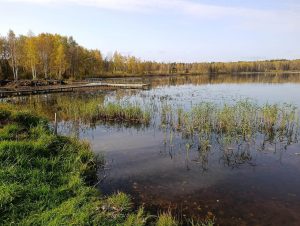
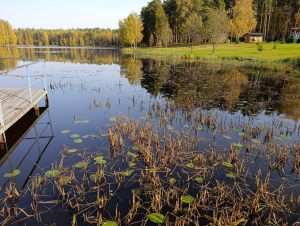
Why clean water bodies are necessary, how pond or lake restoration is performed, and what happens after the ecosystem is rehabilitated. Improvement and restoration of a pond or lake is a technically complex and expensive process, requiring site investigation, involvement of multiple services, and obtaining permits.
Standing water bodies with weak inflow and outflow of water are especially sensitive to pollution.
A clean pond or lake with a landscaped surrounding area becomes more protected from natural degradation. A clean water body is attractive, does not generate foul odors or harmful gases, and helps maintain good groundwater quality. A polluted water body typically contains iron and steel, as well as wood and organic materials. The presence of metal and organic matter reduces oxygen levels necessary for aquatic organisms—leading a pond or lake to become “dead,” which eventually results in full-scale swamp formation and the loss of the water body.
The first stage of pond or lake cleaning is visual assessment, determining the scope of the required work, and identifying the necessary equipment.
Need a pond cleaning? Lake, pond, and river cleaning services. Write a message
Difficulty and challenges of cleaning water bodies
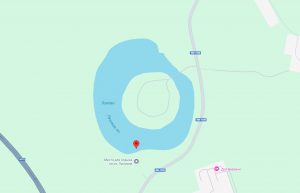
A map of the lake to clean. A place dotted
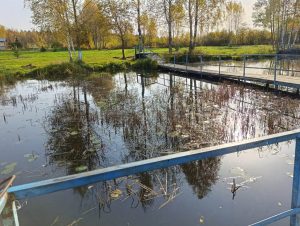
Cleaning a pond or lake is always a demanding engineering task. Within just 2–3 years without maintenance, the water area of an abandoned and littered pond turns into a mass of dense vegetation intertwined with root systems, in which large objects become trapped. The shoreline becomes overgrown with shrubs, forming an impassable wall where machinery cannot operate.
Typical challenges include:
wide range of debris sizes — from plastic bottles to railway rails and reinforced concrete slabs;
submerged wood trapped in bottom layers;
dense aquatic vegetation holding debris like a net;
bottom gas bubbles and viscous silt complicating work;
lack of access roads and operational platforms for equipment;
requirement for manual labor and diving operations.
Therefore, water body cleaning requires a combination of mechanization and manual labor, specialized engineering solutions, and an environmentally responsible approach.
Types of work and methods of execution lake cleaning
1. Cleaning the water surface and removing floating debris
Water surface cleaning includes collecting floating waste, large objects, and woody debris.
Methods and equipment used:
waste-collection boats and platform boats;
amphibious excavators and pontoon systems;
barge platforms for temporary storage;
manual retrieval from boats;
diving operations for rigging and lifting large objects.
Branches, logs, tires, metal elements, concrete fragments, structural debris are removed.
2. Cleaning the bottom from debris, submerged wood, and sunken objects
The bottom of a pond or lake is often clogged with sunken items: logs, metal, construction waste. Bottom cleaning is the most difficult part of the restoration process.
How bottom cleaning is performed:
diving diagnostics;
development of a lifting operations plan;
use of pontoons and hydraulic manipulators;
amphibious machines for coastal work.
Proper bottom cleaning improves depth, gas exchange, and prevents swamp formation.
3. Removal of silt and bottom sediment (dredging)
Silt is a natural ecosystem element, but its excess causes water blooming, strong odor, fish kill, and deterioration of aquatic life.
When dredging is beneficial:
when organic matter exceeds acceptable levels;
in heavily silted ponds and channels.
Dredging methods:
hydromechanical method using a dredger;
amphibious excavator in the coastal zone.
Important: work is not performed during fish spawning periods.
4. Cleaning of the shoreline
Includes collection of trash, branches, leaves, wood debris, and clearing access to water.
Methods:
tractor mechanical removal;
manual cleaning in hard-to-reach zones;
loading waste into containers and disposal.
5. Removal of shrubs and hazardous trees
These operations prevent trees from falling into water and blocking flow in streams and small rivers. Shrub removal provides access to water. The work is usually carried out only on part of the shoreline; most vegetation is preserved as part of the ecosystem. However, if the water body is heavily silted and polluted, or it is a small inner-city pond, shrub removal is performed along the entire perimeter.
Equipment used:
chainsaws, brush cutters, lifts;
rigging and directional felling.
Mandatory requirement: permit for sanitary cutting (logging permit).
6. Sanitary maintenance of the coastal strip
Grass mowing, collection of deadwood and branches, cleaning of the near-shore water area.
Used:
trimmers, lawn mowers;
boats with trawl systems, people with rakes, hooks and nets;
manual garbage collection in bags.
4. Transportation and disposal of waste
All waste is sorted, loaded into containers, and transported to an official landfill. This is a mandatory requirement.
7. Reporting and documentation
photo and video recording “before / after”;
diagrams of cleaned zones;
waste passports and disposal protocols.
How a pond or lake recovers after cleaning
The water body ecosystem begins restoring immediately after removal of waste and excess silt.
During the first year:
water transparency increases;
odor and ammonia concentration decrease;
oxygen balance is restored;
fish, crustaceans and microorganisms reproduce;
natural aquatic plants expand.
During the second year:
stable biodiversity forms;
water self-purification increases;
shoreline grasses stabilize soil and prevent erosion;
recreational value of the territory improves.
A clean water body ceases to be a swamp-like zone and becomes a living natural object—and more. It becomes attractive for recreation. Most importantly, a well-maintained water body is less likely to be used as a dump. An improved public space significantly reduces the likelihood of illegal waste disposal. Still, surveillance cameras are advisable.
Water body cleaning is a complex engineering, environmental and organizational process
It includes pond and lake cleaning from waste, cleaning the water surface, bottom, shoreline, silt removal, and sanitary vegetation cutting. As a result, the water body regains ecological stability, becomes suitable for aquatic life, and safe for people.
Cost of cleaning a lake, pond or river
The cost consists of the following components:
Cost of preliminary investigation and assessments — shoreline and bottom condition, large debris lifting plan, surveyors involvement, topographic survey or drone aerial mapping.
Cost of equipment rental, materials, and labor for water body and shoreline cleaning.
Waste disposal and landfill fees.
We perform pond, lake, and water body cleaning of any complexity: dam clearing, beaver dam removal, spillway cleaning, water surface, bottom and shoreline restoration, shrub clearing, lifting sunken debris, transportation and disposal of waste, photo and video reporting.
Why an unmanaged lake becomes a dump
If a pond or lake is left unmanaged, it surprisingly quickly turns into an illegal dump. For many people, water is perceived as a bottomless place to hide things that interfere with life on the surface. Throw trash — and it disappears. No visible consequences means no sense of responsibility.
The psychological factor is simple: water seems to “wash away guilt,” and without monitoring, penalties, and especially without regular maintenance, when the water becomes overgrown, local residents and passersby no longer perceive the water body as valuable and begin to view it merely as “a useless territory.”
As a result, water bodies accumulate:
plastic, household trash, construction debris, concrete fragments, wood constructions;
old car tires and metal parts, pieces of car bodies;
furniture, appliances and other equipment;
branches and tree trunks.
The problem is aggravated by those who “save money” on legal waste disposal, including private homeowners and small businesses. Thus a lake, dam or pond transforms into a dirty, silted, overgrown water area that loses its attractiveness and value.
What helps stop dumping in lakes?
Cleaning the water body and improving the territory psychologically prevents dumping. Even irresponsible individuals notice that the place is valuable and that punishment for dumping becomes more likely.
Naturally, additional measures help:
cameras and regular monitoring;
real fines for illegal dumping;
creation of convenient waste collection points;
environmental programs and school initiatives;
public reporting “before / after” cleaning;
media and social network activity.
We work comprehensively: machinery + divers + environmental supervision.
We are ready to deliver a turnkey project with guaranteed results.